
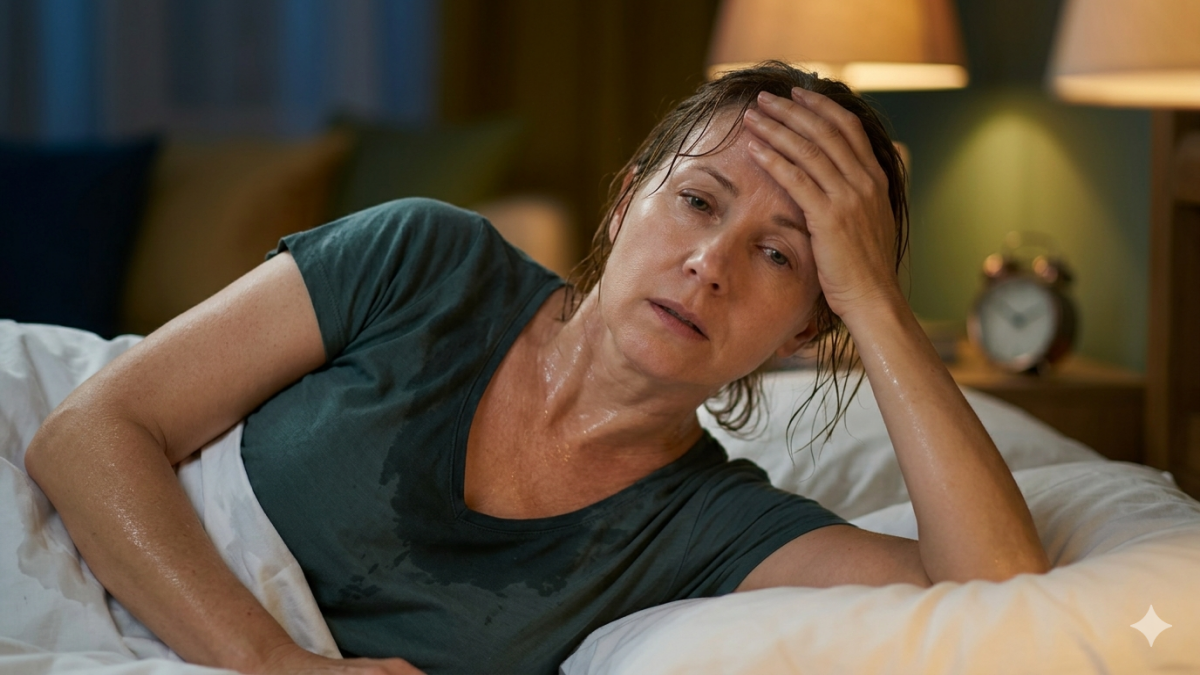
About Night Sweats
Night sweats are very common, with studies indicating that 10% to 41% of adults experience them. They are especially prevalent among adults aged 41 to 55, affecting roughly two out of five people in this age group. While often caused by non-serious factors like room temperature, they are a frequent symptom of menopause and Andropause. it should also be noted that night sweats can also be attriburted to Hyperthyroidism, Sleep Apnea, and Certain antidepressants medications.
Why Does the Body Overheat?
Night sweats are essentially a “false alarm” from the body’s internal thermostat (the hypothalamus).
- For Women (Menopause/Perimenopause): Falling estrogen levels cause the hypothalamus to become hyper-sensitive. It mistakenly thinks the body is overheating and triggers a massive cooling response (sweating) to shed heat.
- For Men (Andropause): Low testosterone can cause the same thermoregulation glitch. While less discussed, “male hot flashes” are a hallmark symptom of significant testosterone decline.
- The Stress Connection: For both, high cortisol (the stress hormone) can keep the body in a “fight or flight” state at night, making spikes in body temperature more likely.
The Impact: More Than Just Damp Sheets
It’s important to highlight that this isn’t just a “nuisance”:
- Sleep Fragmentation: Waking up drenched forces the body out of deep REM sleep.
- Physical Fatigue: Chronic night sweats lead to daytime exhaustion and irritability.
- Skin Irritation: Constant moisture can lead to breakouts or “heat rashes.”
How BHRT Solves the Root Problem
Instead of just cooling the room, BHRT fixes the “broken thermostat.”
- Precision Balancing: Because bioidentical hormones match your body’s natural molecular structure, they “dock” perfectly with your receptors to signal the hypothalamus that everything is normal.
- Estrogen/Progesterone for Women: Estrogen stabilizes the thermostat, while bioidentical progesterone has a natural sedative effect that helps women stay asleep even if a mild temperature shift occurs.
- Testosterone for Men: Restoring testosterone levels helps men regulate their core temperature more effectively, often eliminating night sweats entirely within a few weeks of treatment.
Immediate Lifestyle Remedies (The “Quick Fixes”)
While BHRT works on the inside, these tips help the outside:
- The “3-2-1” Rule: No heavy meals 3 hours before bed, no work 2 hours before, and no screens 1 hour before to keep cortisol low.
- Cooling Fabrics: Recommend moisture-wicking bamboo or linen sheets rather than cotton or polyester.
- Strategic Cooling: Keep a “chill pillow” or a small fan at bedside level to help lower skin temperature quickly during a flash.
- Trigger Avoidance: Mention that alcohol, spicy foods, and caffeine in the evening are the most common “fuel” for night sweats.