
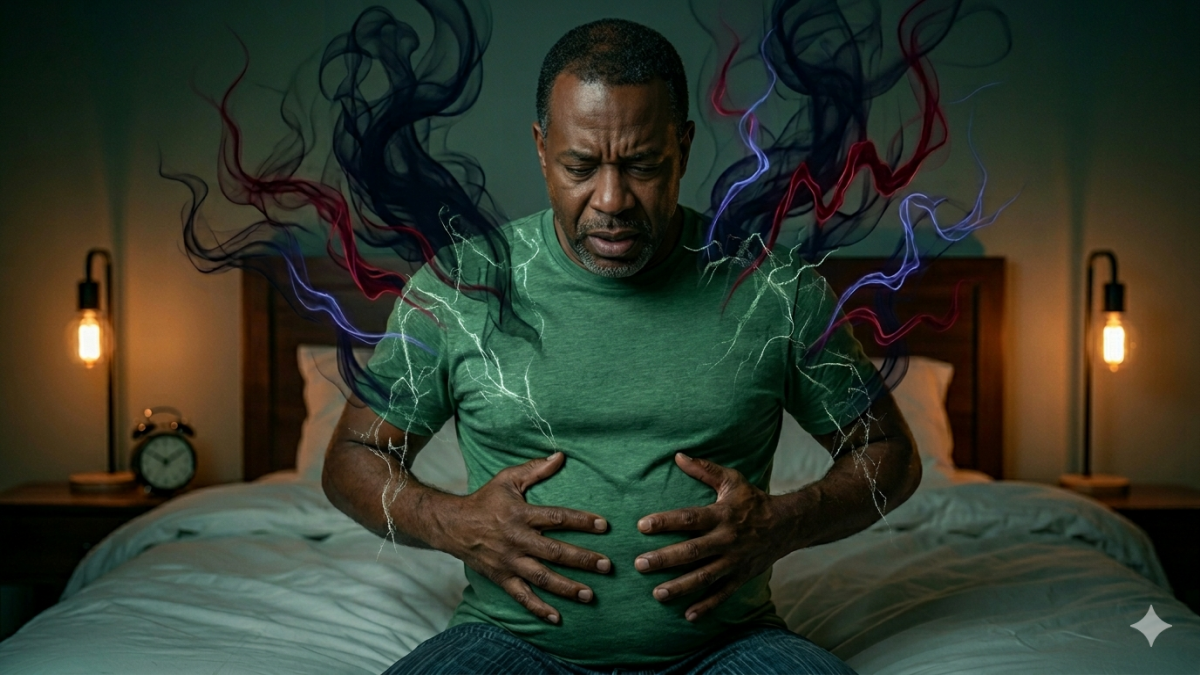
About Bloating
Bloating is a frustrating symptom that often feels like “unexplained weight gain,” but it is frequently tied to the way hormones interact with your digestive system and water retention.
Causes: Why Does Hormone Imbalance Lead to Bloating?
It’s not just about what you eat; it’s about how your hormones signal your body to hold onto fluids and how they affect your gut.
- For Women (Estrogen Dominance & Progesterone Drop): Estrogen is a natural fluid-retainer. In perimenopause, when progesterone (a natural diuretic) drops, estrogen can go “unchecked,” causing the body to hold onto water and salt. This leads to that “tight” feeling in the abdomen and extremities.
- For Men (Testosterone to Estrogen Conversion): When men have low testosterone, their body often converts what little they have into estrogen (a process called aromatization). Higher estrogen levels in men lead to increased water retention and “belly bloating.”
- The Cortisol Connection: For both, chronic stress triggers cortisol, which slows down digestion (leading to gas) and signals the kidneys to store sodium.
How BHRT Resolves the “Puffiness”
BHRT helps “flush” the system by restoring the natural balance between hormones that manage fluid.
- Restoring the Natural Diuretic: In women, bioidentical progesterone helps the kidneys release excess sodium and water, significantly reducing swelling and breast tenderness.
- Optimizing Testosterone: In men, restoring testosterone levels to a healthy range helps balance the estrogen-to-testosterone ratio, which reduces the “soft” bloating often seen in the midsection.
- Gut Health Support: Hormones affect the speed at which food moves through your digestive tract (motility). Balanced hormones help prevent the “sluggish” digestion that causes gas and fermentation in the gut.
BHRT vs. Dietary Bloating
| Food-Related Bloating | Hormone-Related Bloating | |
|---|---|---|
| Timing | Happens shortly after a specific meal. | Persistent and often worse in the morning or evening regardless of food intake. |
| Location | Primarily felt as gas in the stomach. | Felt in the abdomen, face, and sometimes as tight rings or shoes. |
| Associated Symptoms | Heartburn or indigestion. | Mood swings, night sweats, or fatigue. |
| Resolution | Improves by avoiding triggers such as dairy, gluten, and beans. | Improves by restoring hormonal balance through BHRT. |
Lifestyle “Boosters” to Pair with BHRT
While BHRT handles the internal signaling, these tips help speed up the process:
- Increase Potassium: Foods like avocados and spinach help counter the sodium that causes water retention.
- Hydrate to Flush: It sounds counterintuitive, but drinking more water tells your body it’s safe to release the water it’s hoarding.
- Gentle Movement: Walking for 15 minutes after meals helps the gut move gas along more efficiently.