
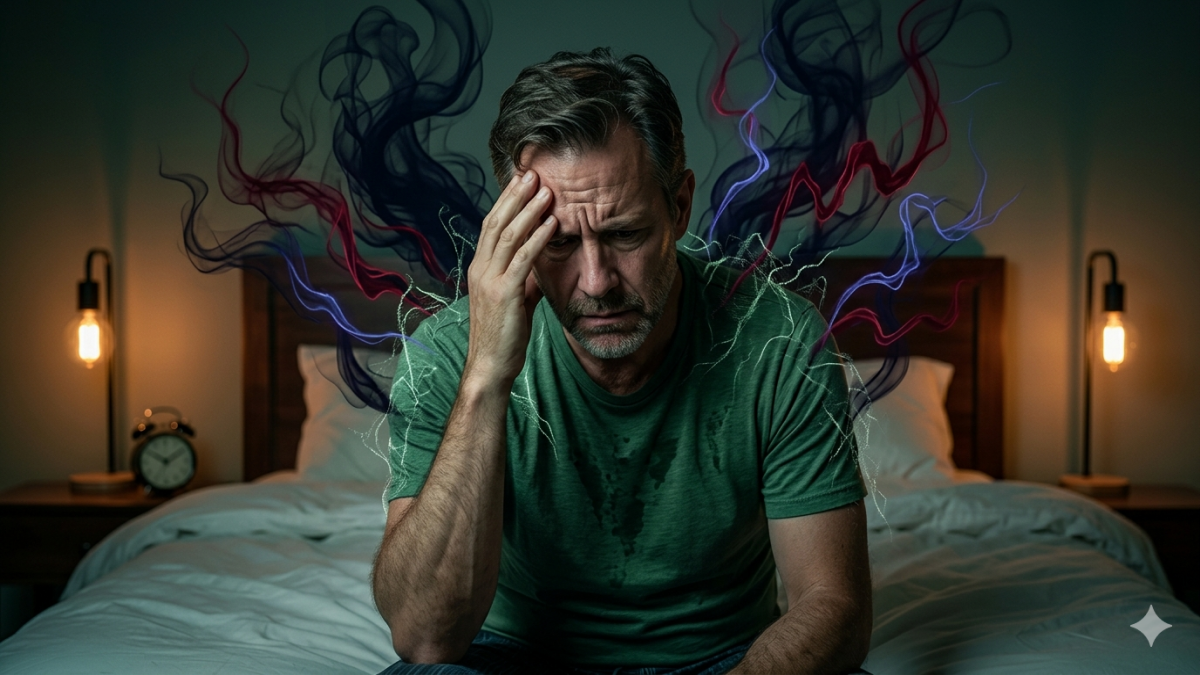
About Anxiety, Mood Swings, and Depression
Hormonal shifts don’t just affect the body; they have a profound impact on brain chemistry. When estrogen or testosterone levels drop, it can feel like your “emotional floor” has fallen out.
The Biological Connection: Hormones as Neurotransmitters
- For Women (Estrogen & Progesterone): Estrogen helps produce Serotonin (the “feel-good” chemical) and Dopamine. When estrogen fluctuates during perimenopause, serotonin levels can plummet, leading to sudden irritability and “crying spells.”
- For Men (Testosterone): Testosterone is linked to GABA (the “calm” chemical) and motivation. Low testosterone can lead to a specific type of “grumpy” depression, social withdrawal, and a loss of the mental “stamina” needed to handle stress.
- The Progesterone Factor: Often called “nature’s Valium,” bioidentical progesterone has a calming effect on the brain. A deficiency is a primary driver of the heightened anxiety many women feel at night.
How Symptoms Manifest Differently
While the root cause is hormonal, the “feel” of these symptoms can vary:
- Mood Swings: The “Zero to Sixty” effect—feeling fine one minute and irrationally angry or devastated the next.
- Anxiety: A new, persistent sense of dread or “impending doom,” often accompanied by heart palpitations that feel like a panic attack.
- Depression: Often described as a “flatness” or lack of joy (anhedonia) rather than just sadness. In men, this often looks like increased irritability or “snapping” at loved ones.
How BHRT Resolves the Emotional Rollercoaster
BHRT isn’t just about physical health; it’s neurological restoration.
- Steady-State Delivery: Unlike the erratic spikes of perimenopause, BHRT provides a steady, consistent level of hormones, which prevents the “crash” that triggers mood swings.
- Natural Anti-Anxiety: Restoring bioidentical progesterone can significantly reduce the “racing thoughts” that keep people awake at night.
- Restoring the “Drive”: For men, bringing testosterone back to optimal levels often clears the “gray cloud” of depression, restoring a sense of confidence and emotional resilience.
BHRT vs. Traditional Antidepressants
Many people are prescribed SSRIs (antidepressants) for these symptoms when the actual issue is hormonal.
- Targeted Treatment: While SSRIs can be helpful, they don’t fix a testosterone or estrogen deficiency. BHRT treats the source of the chemical imbalance rather than just managing the symptoms.
If you answer yes to these questions your mood issues might be hormonal:
- Do my mood swings seem to happen without a clear external trigger?
- Am I suddenly struggling with “social anxiety” in places I used to feel comfortable?
- Has my “patience fuse” become much shorter than it used to be?
- Do I feel “numb” or “unmotivated” despite things going well in my life?
BHRT vs. Antidepressants: Finding the Right Path for Your Mood
When you visit a doctor for mood swings, irritability, or low energy, the “standard” answer is often a prescription for an SSRI (like Lexapro or Zoloft). While these medications are lifesavers for many, they work differently than hormone therapy. If your mood issues are caused by a hormonal deficiency, BHRT may address the root cause rather than just masking the symptoms.
| Antidepressants (SSRIs/SNRIs) | Bioidentical Hormone Therapy (BHRT) | |
|---|---|---|
| How It Works | Slows the reabsorption of serotonin in the brain to keep more available. | Restores the “building blocks” (Estrogen/Testosterone) the brain uses to make serotonin and dopamine. |
| The Target | Brain chemistry and neurotransmitter recycling. | The endocrine system and hormonal root causes. |
| Common Side Effects | Weight gain, decreased libido, and “emotional numbing.” | Improved libido, better sleep, and increased muscle tone (when optimized). |
| Best For | Clinical depression/anxiety unrelated to life stages or hormones. | Mood issues tied to menopause, perimenopause, or andropause (Low T). |
| Added Benefits | Can be effective for chronic, long-term mental health conditions. | Also resolves physical symptoms like hot flashes, night sweats, and brain fog. |
Which One Do You Need?
It isn’t always “either/or”—some people benefit from both. However, here are three signs that BHRT might be the more effective starting point for you:
- The “Sudden Onset” Factor: You’ve never struggled with clinical depression before, but as you hit your 40s or 50s, you suddenly feel “not like yourself.”
- Physical Symptoms: Your low mood is accompanied by night sweats, low libido, weight gain, or joint pain.
- The SSRI “Flatline”: You’ve tried antidepressants, but they made you feel “numb” or “zombie-like” rather than happy, or they simply didn’t work.