
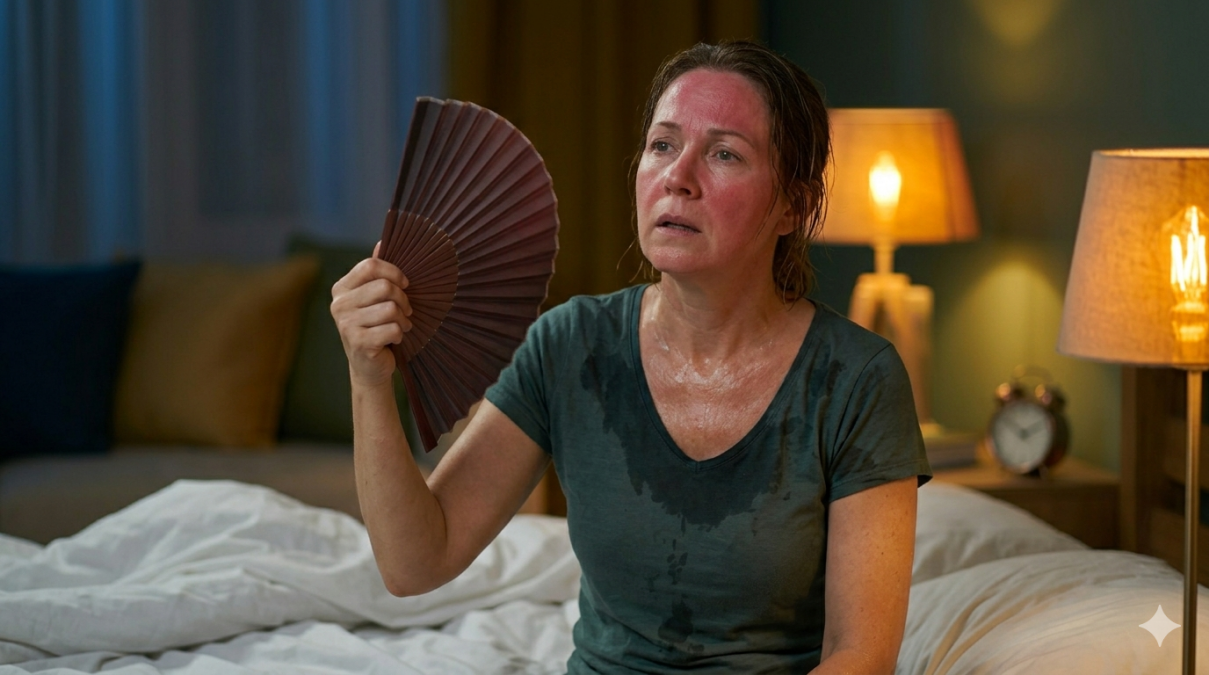
About Hot Flashes
Hot flashes are the most common symptom of menopause, affecting approximately 75% to 85% of women during the transition. Like night sweats, these sudden waves of heat are rooted in a “thermostat glitch” in the brain.
Causes: The Internal Thermostat Glitch
Hot flashes are caused by declining estrogen levels, which disrupt the hypothalamus, the part of the brain that regulates body temperature.
- Narrowed Threshold: Lower estrogen makes your brain’s “neutral zone” much smaller. Even a tiny rise in body temperature can trick the brain into thinking you are dangerously overheating.
- The Cooling Cascade: To “fix” this perceived overheating, the brain triggers a rapid cooling response: your heart rate increases, blood vessels near the skin dilate (causing the “flush”), and sweat glands activate to shed heat.
Remedies: Lifestyle Adjustments
For many, managing hot flashes starts with identifying and avoiding personal triggers.
- Identify Triggers: Common culprits include spicy foods, caffeine, alcohol, and hot beverages.
- Strategic Layering: Wear breathable fabrics (like cotton or linen) and dress in layers that can be removed quickly as soon as a flash starts.
- Environmental Cooling: Use portable fans, keep your workspace or home at a lower temperature, and sip ice-cold water at the first sign of a flash.
- Paced Breathing: Deep, slow breathing exercises (5 seconds in, 5 seconds out) can help calm the nervous system and potentially reduce the severity of a flash.
How BHRT Solves the Root Problem
While lifestyle changes manage the heat, BHRT addresses the source.
- Restoring Estrogen: BHRT uses hormones that are molecularly identical to what your ovaries used to produce. By replenishing these levels, BHRT stabilizes the hypothalamus, preventing it from sending those false “overheating” signals.
- Reduced Severity & Frequency: Clinical evidence shows that hormone replacement is the most effective treatment for moderate to severe hot flashes, often reducing their frequency by 80% to 90% or eliminating them entirely.
- Bioidentical Advantage: Because these hormones match your body’s natural structure, they are often better tolerated than older, synthetic options, allowing for a more personalized dosing approach.
| Lifestyle Remedies | Bioidentical Hormone Therapy (BHRT) | |
|---|---|---|
| Primary Goal | Managing the symptoms | Fixing the hormonal root cause |
| Best For | Mild, occasional flashes | Moderate to severe daily disruption |
| Examples | Layering, cooling fans, diet tweaks | Estrogen and Progesterone (creams, patches, or pills) |
| Speed of Relief | Immediate (but temporary) | Significant reduction often within 2–4 weeks |